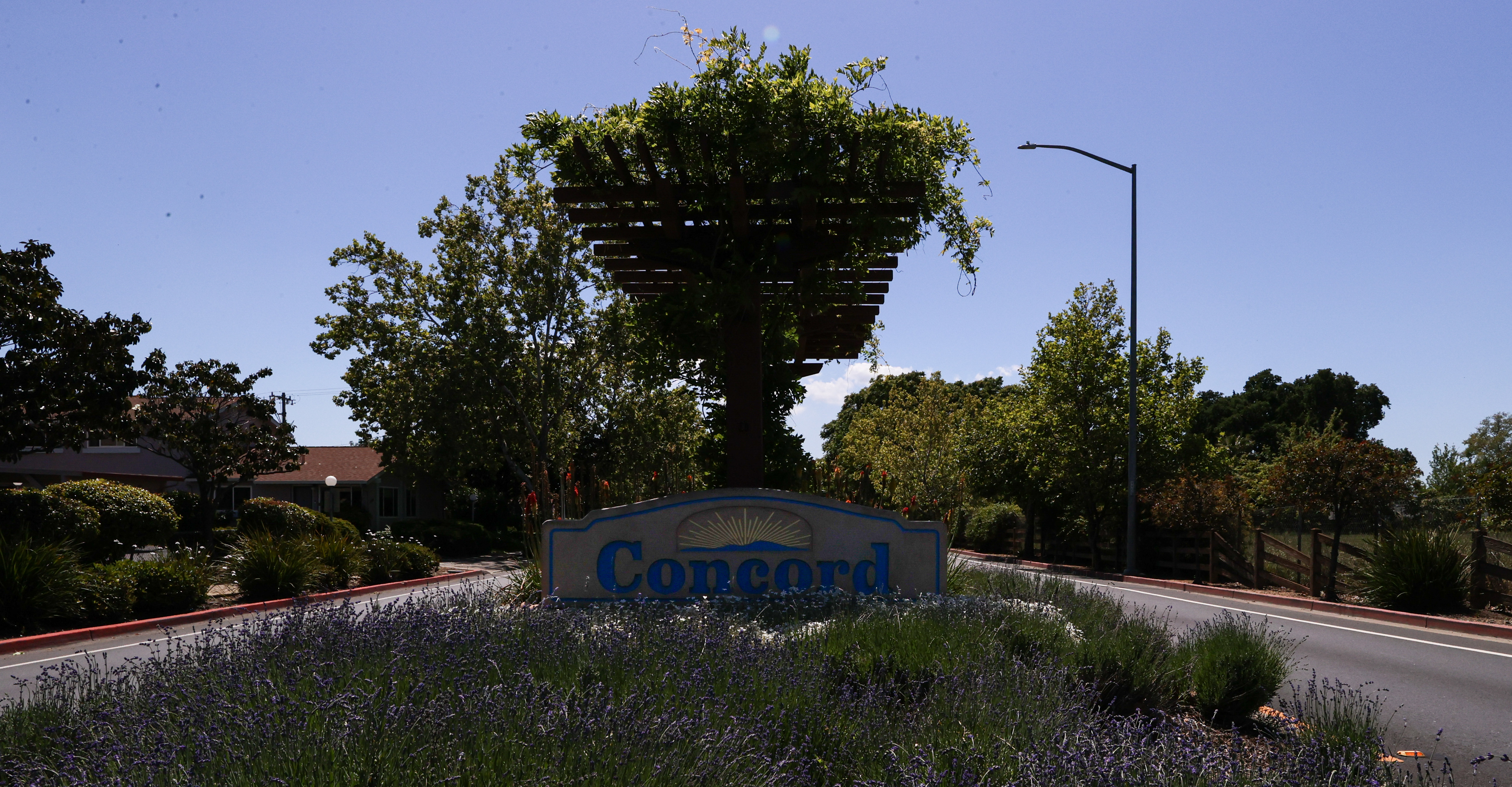
Need a Date of Death appraisal in Concord?
James Valdez specializes in date of death valuation in Concord, Contra Costa County.
Retrospective appraisals for probate, estate settlement, trust administration,
inherited property, stepped-up basis, and IRS reporting.
Date of Death Appraisals in Concord
A Concord date of death appraiser determines the value of real estate as of a specific prior date,
most commonly the date of death. A date of death appraisal in Concord is often needed for
estate settlement, probate, trust administration, IRS reporting, and step-up basis documentation.
Whether you are searching for a date of death appraisal Concord,
Concord date of death appraisal, estate appraisal Concord,
or a probate appraiser in Concord, the goal is the same: to produce a well-supported
opinion of value based on market evidence from the effective date.
Estate, Probate, and Stepped-Up Basis Appraisals
A Concord estate appraisal is commonly used when real estate is inherited or transferred
through an estate. Attorneys, CPAs, trustees, heirs, and estate representatives often need a
probate appraisal in Concord to document fair market value as of the date of death.
These reports are commonly used to support stepped-up basis, estate tax reporting,
trust administration, and probate-related valuation needs. The report is prepared in compliance
with USPAP and supported with comparable sales research, market data, and clear documentation.
Because these assignments require determining value as of a prior date, the work is performed as a retrospective appraisal. As a retrospective appraiser in Concord, I reconstruct the market as it existed at the time of the effective date by analyzing comparable sales, market conditions, and buyer behavior from that specific period. Rather than applying current market trends, a retrospective appraisal in Concord focuses on how properties were actually competing at that time, using historical data and market-extracted adjustments derived from paired sales to support the analysis. This approach helps ensure that the resulting opinion of value reflects how the market behaved on the date of death, which is critical for estate, probate, and tax-related reporting.
My Approach to Concord Date of Death Appraisals
My appraisal process emphasizes comparable sales research, paired sales analysis, and
market-extracted adjustments via paired sales. Comparable sales are used to bracket
the subject within its competitive market segment, while paired sales help isolate how buyers reacted
to specific differences in location, condition, lot utility, railroad proximity, zoning, planned development,
and other property characteristics.
This approach is especially important in Concord because the city is large, diverse, and internally segmented.
A property in North Concord, the Clayton Road corridor, southeast Concord, or the Walnut Creek-adjacent southwest
area may not compete with the same buyer pool. The result is a report that is well documented and capable
of standing up to review by attorneys, CPAs, courts, or the IRS.
Concord Market Considerations
Concord is one of the larger residential markets in Contra Costa County, and it should not be treated as one
uniform market. North Concord includes a smaller area south of Highway 4 and west of Highway 242, where many
homes are smaller ranch-style residences. This area can function as a starter-home segment and often has more
turnover than expected for a smaller neighborhood.
North of downtown Concord, including areas around both sides of Port Chicago Highway, the market is generally
flatter and includes a mix of RS-6 and RS-7.5 residential zoning. This portion of Concord can be different from
the more residential neighborhoods extending west and east along Concord Boulevard and Clayton Road.
Moving along Concord Boulevard and Clayton Road, the city includes broad residential areas with RS-7, RS-7.5,
and RS-8 zoning. As the market moves farther east toward the Clayton side, the residential setting can begin
to feel less urban and more rural in character. This can affect buyer expectations, lot utility, and comparable
sale selection in a retrospective appraisal.
South of Clayton Road, Concord includes additional residential areas with RS-10 zoning, creek-adjacent properties,
and a large amount of planned development condominium and townhome inventory farther southeast. These PD condominium
and townhome areas may have their own comparable sales patterns and should not automatically be mixed with detached
single-family residential neighborhoods.
Southwest Concord is influenced by proximity to Walnut Creek and a small portion of Pleasant Hill. However, Walnut
Creek or Pleasant Hill comparable sales should not be used casually. If a Concord property requires comparison to
a neighboring city, paired sales analysis should be used to determine whether the market supports that relationship.
In many assignments, it is better to stay within the Concord market when credible Concord comparable sales are available.
Concord Neighborhood Appraisal Experience
Concord includes several distinct residential submarkets, and comparable selection should reflect
the subject's actual buyer pool rather than treating the city as one uniform market. I also provide
date of death and retrospective appraisal services for specific Concord neighborhoods including
Turtle Creek and
Clayton Valley.
These areas can differ in lot size, age, condition, school influence, commute access, nearby commercial
influence, and buyer expectations. For estate and probate assignments, those differences matter when
selecting comparable sales and supporting retrospective market adjustments.
Railroad Influence, Zoning, and Market Boundaries
Railroad tracks run through portions of Concord, and railroad-adjacent properties may require specific analysis.
In some cases, paired sales can help determine whether the market recognized a measurable difference for properties
located near the tracks compared with similar properties without that influence.
Zoning also varies throughout Concord, including RS-6, RS-7, RS-7.5, RS-8, RS-10, and planned development areas.
Zoning does not always control value by itself, but it can matter when it reflects differences in density, lot size,
neighborhood character, or buyer expectations.
Concord can appear easy because there is usually more inventory than in smaller Contra Costa communities, but the
size of the city can make comparable selection more important. A sale from one side of Concord may not be the best
indicator for another area if the buyer pool, zoning, access, school influence, or neighborhood character differs.
Concord, Clayton, and Nearby Market Differences
Clayton is nearby, but it is not simply the same market as Concord. Clayton has a quieter residential feel and lacks
the same freeway access found in Concord. Because of that, Clayton may attract a different buyer pool, especially
for properties where setting, quiet location, and community character are important.
When performing a retrospective appraisal in Concord, it is important not to automatically blend
Concord, Clayton, Walnut Creek, Pleasant Hill, or Martinez sales without support. These markets may overlap in some
buyer behavior, but each has its own identity. When cross-market sales are considered, paired sales, allocation, or
other market-supported methods may be needed to support the conclusion.
Understanding these differences helps avoid applying broad Contra Costa assumptions to a property that competes in
a specific Concord market segment. This is where paired sales and market-extracted adjustments can provide important
support.
- ✔️ USPAP-compliant reports prepared for IRS and estate documentation
- ✔️ 48-hour turnaround available for many assignments
- ✔️ Flat-rate pricing with no hidden fees
- ✔️ Experience working with attorneys, CPAs, heirs, and estate representatives
Who Typically Needs a Date of Death Appraisal?
In Concord, Date of Death appraisals are commonly needed by heirs, trustees, executors,
probate attorneys, and CPAs when a property owner has passed away and the value of the real estate
must be established as of the date of death.
A properly researched Concord estate appraisal or Concord probate appraisal
helps support estate settlement, tax reporting, and probate proceedings by providing a well-supported
opinion of value based on market evidence from the relevant time period.
For a broader explanation of how Date of Death appraisals work—and when they are used for probate,
estate settlement, trust administration, and stepped-up basis reporting—see my
Date of Death appraisal overview.
Concord Appraisal Services
Related Date of Death, estate, probate, and retrospective appraisal pages for Concord:
Concord Neighborhoods
Date of Death and retrospective appraisal coverage by neighborhood and submarket in Concord:
Service Areas
I cover properties throughout Concord, including North Concord, downtown Concord, areas around Port Chicago Highway,
Concord Boulevard, Clayton Road, southeast Concord, southwest Concord, creek-adjacent residential areas, railroad-adjacent
properties, detached single-family neighborhoods, condominium and townhome developments, and planned development areas.
Zip codes served include 94518, 94519, 94520, and 94521.
I also provide Date of Death and estate appraisals in nearby Contra Costa County communities including
Walnut Creek,
Pittsburg,
Pleasant Hill, and
Clayton.
You can view all service areas here:
East Bay Date of Death Appraiser.
If you are searching for a Date of Death appraisal in Contra Costa County, CA, you can also view the full
Contra Costa County retrospective appraisal page for additional information regarding estate, probate, and retrospective valuation services throughout Contra Costa County and the East Bay.